
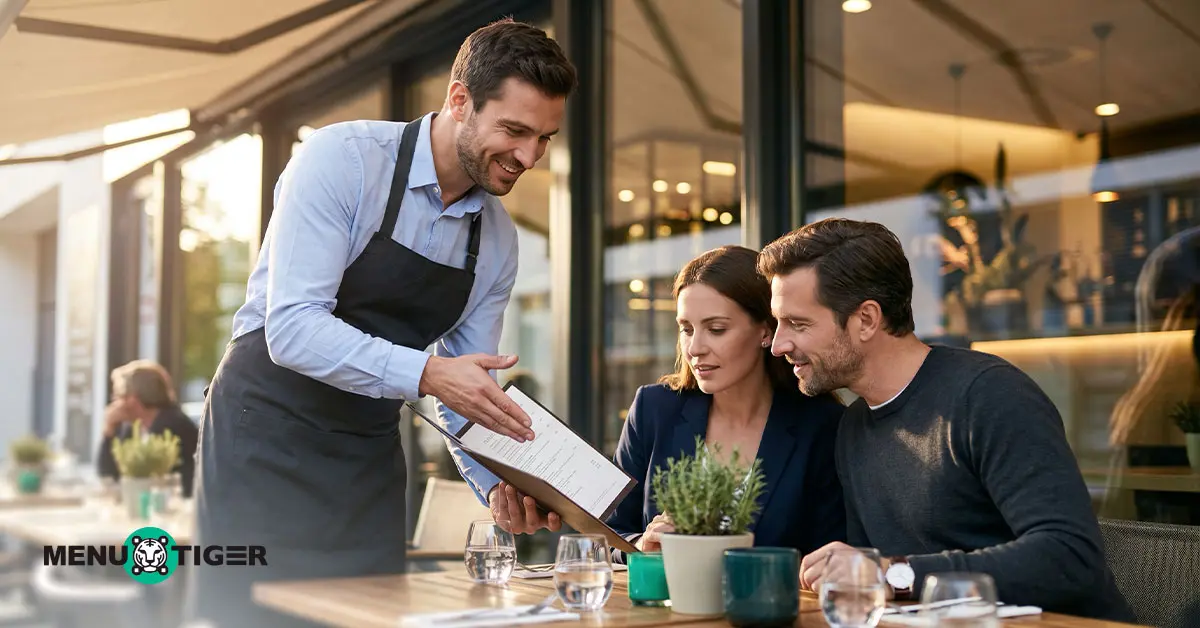
What Is Suggestive Selling? Definition, Benefits, and Techniques
Last Updated: August 4, 2026
Suggestive selling improves customer experience while naturally increasing order value through relevant recommendations.
This strategy addresses the rising food costs and increasing competition; restaurants need smarter ways to increase revenue without additional marketing spend.
This article explains what is suggestive selling and the techniques used to boost average order value and overall revenue.
What is suggestive selling?
Suggestive selling is a sales technique where restaurant staff or restaurant technology recommends additional items, upgrades, or complementary dishes to customers based on their initial order.
Unlike basic order-taking, it is a proactive approach that encourages customers to explore more options, such as:
- Adding a side dish or drink
- Upgrading to a premium version
- Ordering appetizers or desserts
- Trying a recommended special
The purpose is to help customers discover items they may enjoy, such as complementary dishes, upgrades, or add-ons that go well with their main order. At the same time, it benefits the business by increasing sales naturally and helpfully rather than through forceful selling.
Suggestive selling vs. Upselling vs. Cross-selling
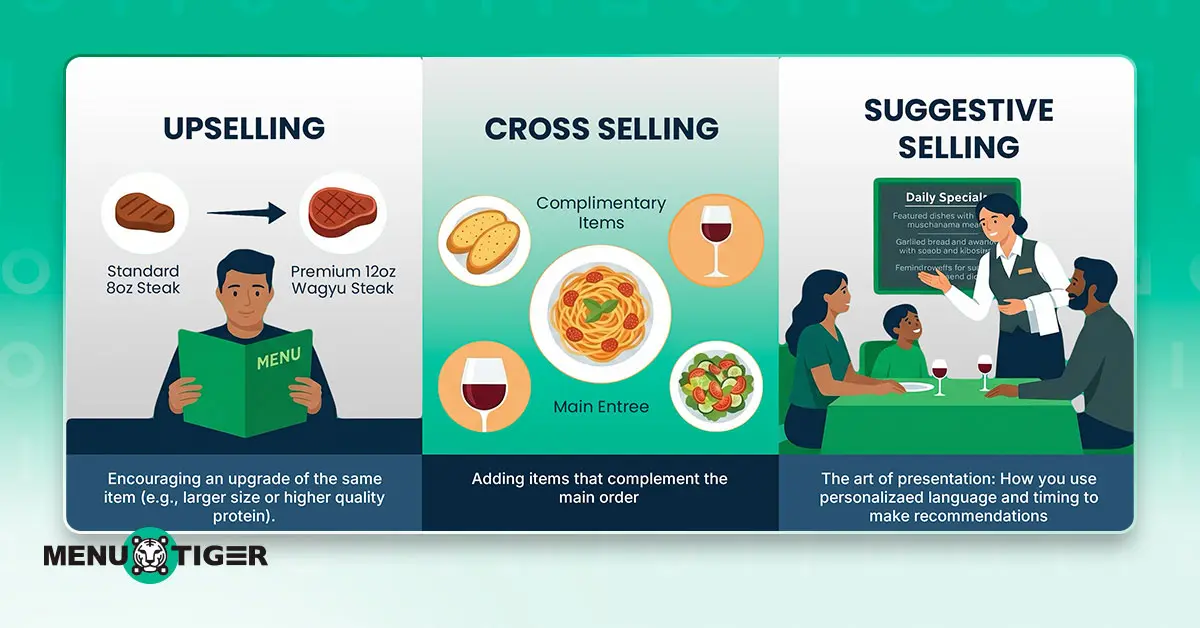
Cross selling and upselling are often used interchangeably because they serve a similar purpose. However, each one uses a different approach to generate sales, and suggestive selling is the technique that makes both happen.
Upselling
Upselling is when you encourage customers to purchase a higher-value or upgraded version of what they originally intended to buy.
Example:
“Would you like to upgrade to a large meal instead of a medium for an extra $2?”
Focus: Encouraging an upgrade of the same item.
Cross-selling
Cross-selling is when you suggest related or complementary items that go well with the customer’s main order.
Example:
A customer orders pasta —“Would you like garlic bread or a drink with that?”
Focus: Adding items that complement the main order.
Suggestive selling
Suggestive selling is the strategy behind both. It focuses on timing, communication, and relevance
In short:
- Upselling: Encouraging an upgrade of the same item.
- Cross-selling: Adding items that complement the main order.
- Suggestive selling: How you present these recommendations to the customer.

The benefits of suggestion selling for your restaurant
Suggestive selling has shown a great impact in the industry, and it is a widely used sales technique, even in established restaurant brands. Here’s why:
1. Increase order value and suggestive sales
Cross-selling can increase AOV by approximately 10%-15%, while combined cross-selling and up selling techniques have been shown in retail and e-commerce studies (including McKinsey analyses) to boost overall revenue by 20%-30%. (Shnoco, n.d)
2. Boosts sales without extra marketing spend
Instead of relying on additional marketing spend or waiting for more customers to come in, suggestive selling focuses on maximizing the value of every existing order.
3. Improves customer experience
Aside from introducing food pairing suggestions from your menu that customers are likely to enjoy, it also helps them decide faster through clear and relevant recommendations, reducing decision fatigue.
4. Reduces reliance on discounts
Instead of lowering prices to increase sales, suggestive selling focuses on increasing order value. This helps restaurants protect restaurant profit margins while still driving revenue growth. Over time, this reduces dependency on constant promos or discount campaigns.
5. Supports inventory movement
The old script from customers, “What is your best seller here?”, usually only generates sales for a few popular dishes. This is why restaurants often face challenges with slow-moving ingredients or overstocked items from menu items.
Strategic suggestions can help promote these dishes, reducing food waste in restaurants and improving inventory turnover while maintaining profitability.
8 techniques on how to suggest menu items effectively
1. Value-based recommendation
Don’t recommend items that don’t make sense, such as offering hot coffee on a summer day. This can come across as sales-driven rather than genuinely helpful.
Always ensure your recommendations are useful and relevant, as being too pushy can disrupt the customer experience and reduce satisfaction.
To lessen the sales talk effort, add value to the item, not just increase sales.
2. Food pairing staff training
Upselling and cross-selling are not just about telling staff to promote items. Staff need to be educated on food and drink pairing ideas today.
Worst-case scenario: If staff cross-sell random pairings without a clear understanding of how the items work together, it may come across to customers as a scam.
Pro tip: Conduct a tasting session so staff can confidently recommend pairings based on actual experience.
3. Natural conversation service
The first step is to encourage staff to converse confidently through practical demonstrations or guided scripts until they develop their own natural style.
Then, provide a time frame during which they can rely on the guide, while ensuring upselling never feels scripted or robotic.
Instead of memorizing lines, train staff to use touchpoints, which are natural conversational cues that highlight flavors, pairings, or experiences.
This approach allows upselling to feel like genuine hospitality, guiding guests toward a better experience, rather than a sales pitch.
4. Conditional requirement strategy
This is useful for low foot traffic days when the goal is to maximize sales per table.
Use a smart restaurant management system that forecasts foot traffic so staff can identify the right days to require customers to upgrade to the best-selling drinks.
However, this strategy can backfire if customers choose to cancel drinks instead of upgrading.
To avoid this, do not enforce upgrades without alternative options at a similar or slightly lower price point to maintain customer satisfaction.
5. Non-intrusive questioning
Asking questions is a way to understand small, relevant details about the customer’s situation. This helps staff identify appropriate upsell or cross-sell opportunities, as long as the questions remain light, natural, and non-intrusive.
For example:
“Good morning! Table for one or two?”
This allows staff to naturally suggest sharing platters or “good for two” meals.
“Good morning! How are you today?”
This allows staff to suggest items based on response and mood.
“Is this your first time here?”
This allows staff to offer bestsellers for first timers and new items for regulars
6. Embedded upsell culture
Most common motivators, such as contests and rewards, can boost upselling performance, but typically only in the short term.
Lasting results come from building a culture where suggestive selling becomes a value-based behavior, embedded in hiring, training, and daily operations.
It should feel like this is simply how things are done here, rather than something extra that employees are pushed to do.
7. Loyalty-driven upsell system
Starbucks Rewards is one of the strongest real-world examples of trust-based upselling.
Customers earn Stars on eligible purchases, which makes them more willing to upgrade drinks, such as adding extra shots, syrups, or increasing cup size, because they receive rewards in return.
This loyalty-driven system has significantly increased repeat purchases and average order value.
8. Seasonal-based selling
Many global chains adjust upselling strategies based on seasonality. For example, cold beverages are emphasized in summer, while hot drinks are promoted in colder seasons.
This is a standard retail and F&B practice used by brands like Starbucks and McDonald’s to ensure recommendations match customer context, improving conversion rates.
5 ways restaurant ordering systems help recommend menu items
Since the COVID-19 pandemic, online ordering platform for restaurants has become the new normal, and around 75% of restaurants worldwide now use digital menus (qrcode.co.uk, 2024).
However, most use them only as a way to display their menu. Here’s a simple hack on how you can maximize them for suggestive selling:
1. Add-ons and modifiers
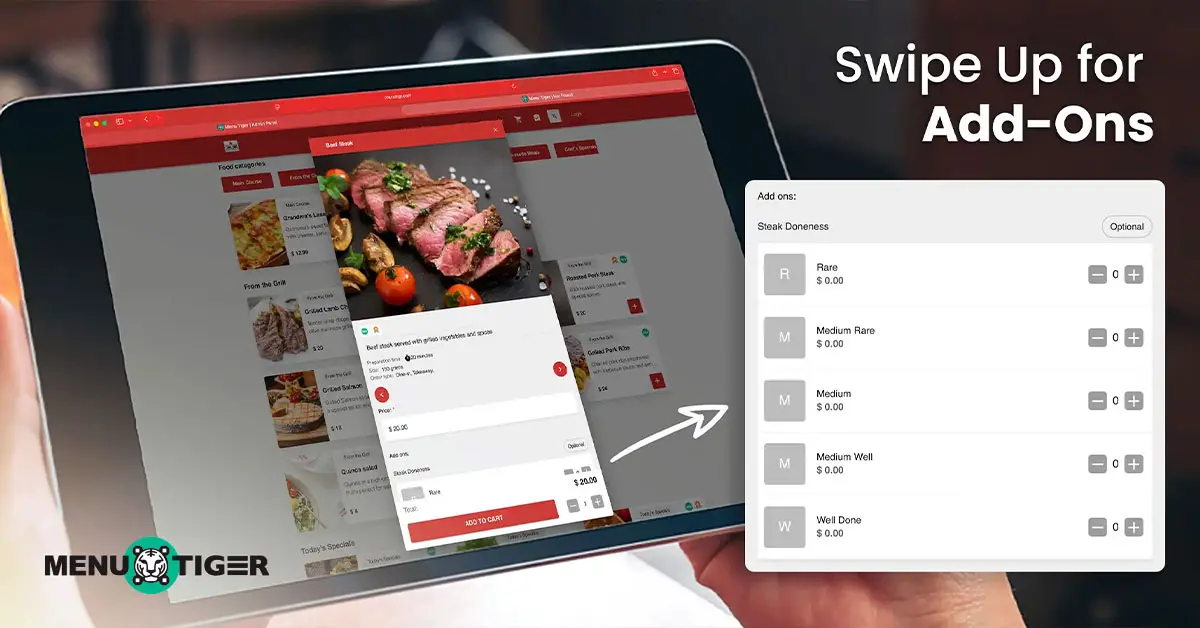
You can set up your optional or required choice and add ons to your online men, they will automatically appear for every dish the customer selects.
2. Promotional section
A smart restaurant order management system usually includes a section in the digital menu where featured or promotional items can be highlighted.
Use this to make selected menu items more visible and appealing from the customer’s point of view.
Pro tip: You can also use this section to promote freebies based on spending ranges (e.g., 5% off for $50+ spending), encouraging higher order value.
3. Email marketing
Your restaurant order system usually collects emails and other customer details for marketing purposes. Use this data to send updates about new menu items, promotions, and special offers.
4. Menu item descriptions
Digital menus allow you to write compelling descriptions for each item, helping draw attention to popular dishes and influence customer choices.
You can highlight bestsellers and describe flavors in detail so customers better understand what each item tastes like and what it pairs well with.
5. Time-based recommendations
Digital menus organize items into categories and sort them into groups.
By using time-based menus, you can display the most relevant items at the right time.
This is an advantage because it helps ensure that each dish achieves a balanced level of sales throughout the day.
Sell better with every interaction.
Now that you know what is suggestive selling, it is clear that it is not about pushing customers to spend more, but about helping them make better and more satisfying choices.
The good news is that no matter what ordering method you use, whether traditional order-taking or a restaurant order management system, it still works effectively.
When applied properly, it turns every interaction into an opportunity to improve the dining experience while naturally increasing order value.
FAQs

Eulla
Eulla joined MENU TIGER’s Content Team with a foundation in English teaching. She combines language expertise and creativity to produce engaging content that educates audiences and drives meaningful results.
Affiliates





© 2026 Menu Tiger. All rights reserved