
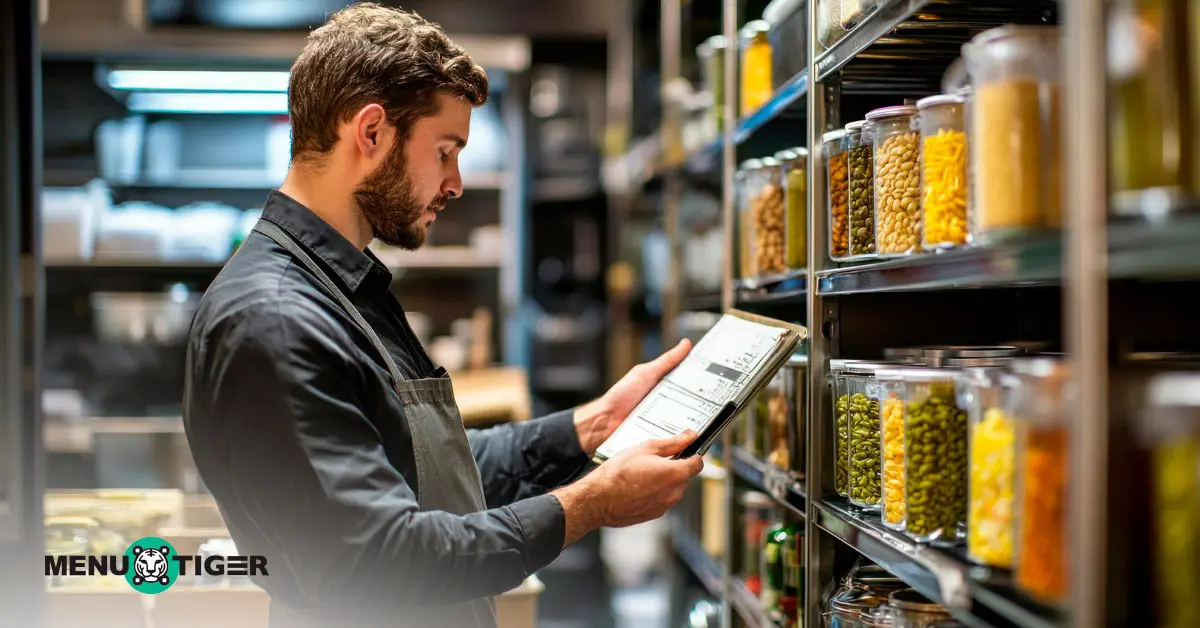
What is FIFO? The Inventory Method Restaurants Should Know
Last Updated: August 4, 2026
Food waste, rising costs, and last-minute menu disruptions often trace back to one fixable root cause: poor inventory rotation.
Understanding what is FIFO ( first in, first out) method—and applying it alongside smart menu management—is how restaurants regain control of their kitchens and their margins.
What is FIFO?
The quick answer:
FIFO or First In, First Out, is an inventory management method in which the oldest stock is always used, sold, or served before newer items.
In practice, this means ingredients or products that arrived earliest are stored at the front of shelves and fridges, and used first during prep and service.
For restaurants and food businesses, it is the industry-standard approach to stock rotation, food safety compliance, and cost control.
This method’s principle is simple: the items with the earliest best-before dates are stored in front of the fridges and shelves, while the newer ones are placed at the back.
Think about when restocking bottled drinks in a supermarket. The staff place existing stock in front and place the new ones at the back, so when customers shop, they naturally grab the ones on the front.
When applied in your business, it helps reduce food waste in restaurants as ingredients are used before it expires.
How the FIFO method works in action in restaurants
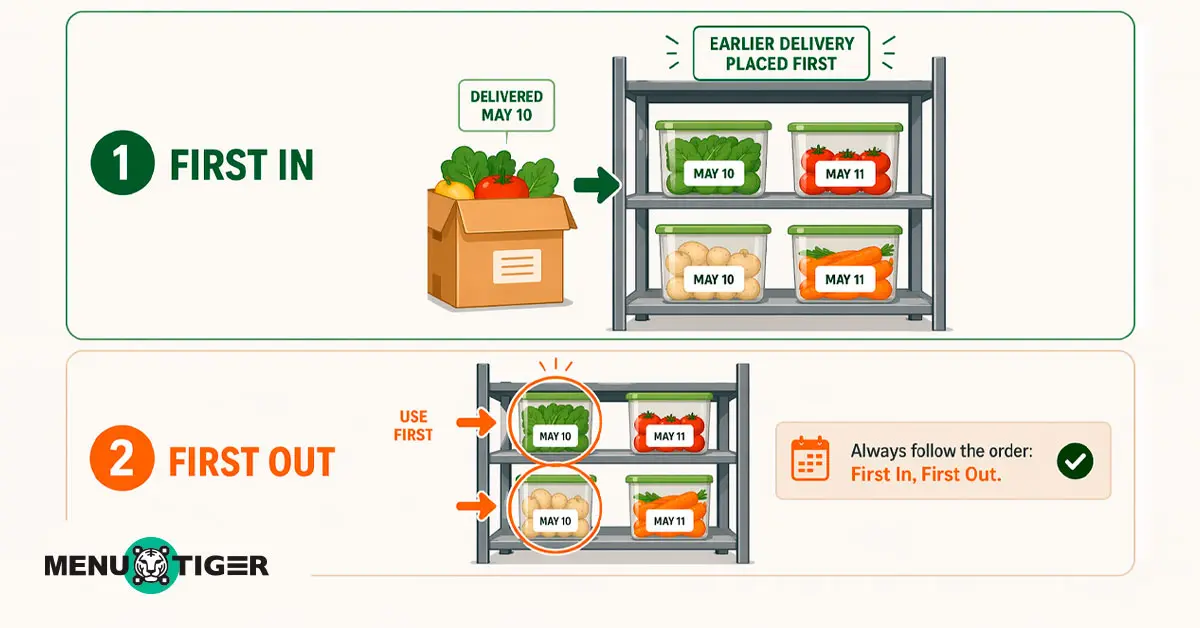
In practice, it is applied through disciplined storage and usage habits:
- First In: The ingredients delivered earlier in the restaurant are clearly labeled with delivery or prep dates and placed in storage first.
- First Out: During prepping and service, the staff must use the oldest items on the stock first before using the newly delivered items.
A straightforward example is if the meat arrives on Monday and another batch arrives on Wednesday, the Monday stock should be used first to prevent older inventory from being forgotten and expiring in storage.
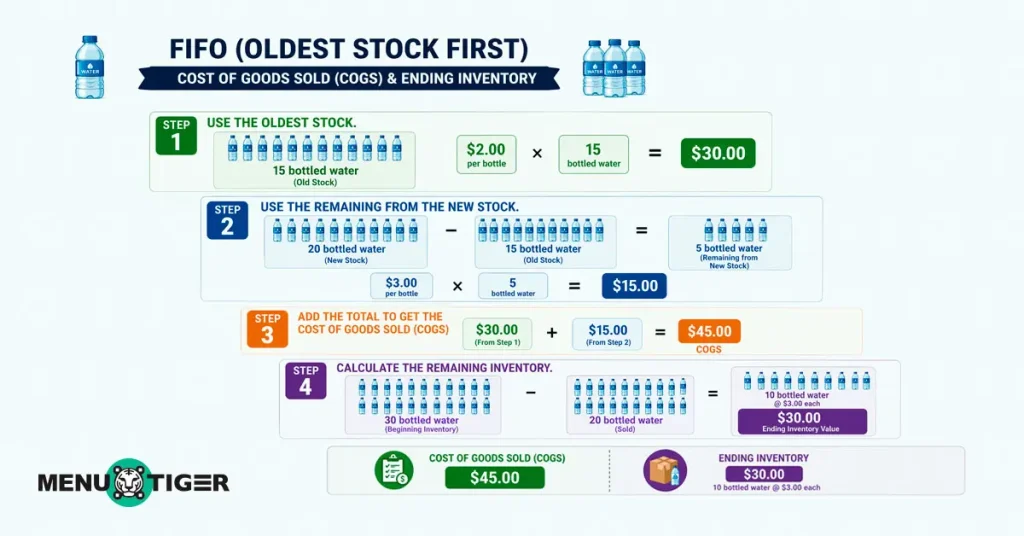
FIFO calculation: Formula and example
To calculate FIFO, you have to always assume that the oldest inventory is the first one sold or used. Each time this happens, you ‘pull’ from the earliest purchase first before moving to newer stock.
Let’s say you purchased:
15 bottled water in inventory at $2.00 each
15 bottled water $3 .00 each (newer batch)
You sold 20 bottled water.
Using FIFO, you will calculate like this:
7 practical tips to apply the FIFO system
Successful implementation of this rotation system requires you to have structure and be less reliant on memory.
Here are tips you can do as a starter:
1. Label everything clearly and be consistent.
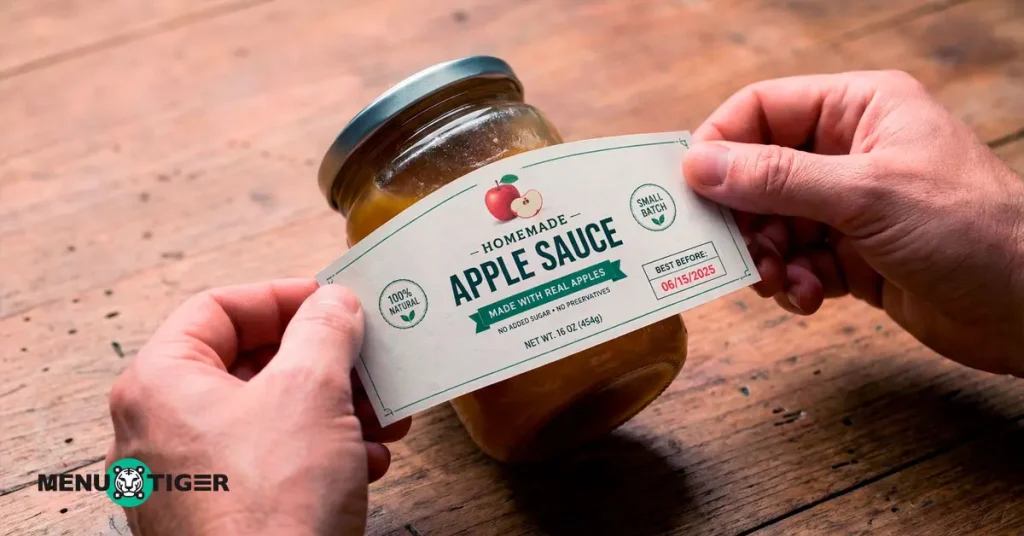
Labeling lays the groundwork for the FIFO method.
Every item in your stock room, with the delivery date, the use-by date, and the product name, must be marked with no expectation.
And this should be regularly done when a new delivery comes in.
Some big restaurants impose a regular schedule in labeling their stock once the restaurant food supplier completes the delivery, so it’s easier for their staff to instantly identify what items they’ll need to use first during operations.
This is a smart way to prevent spoilage and end up with ingredients to waste.
2. Organize your storage in a strict rotation system.
Storage layout influences the behavior of your kitchen.
Set up a rotation system where the old stock is placed physically at the front, while the new ones are stored behind it.
Designate storage for bottled drinks, canned goods, and other dry food items so it’s manageable to apply this rule.
As for cold goods like meat, please newly delivered at the bottom of the fridge and the older stock on top of it.
This design makes the correct choice the easiest choice during service hours.
In a professional or commercial kitchen like yours, where speed is critical, this system can guide your staff automatically, reducing spoilage due to ‘hidden stock’ that gets pushed back.
3. Train staff on FIFO as a daily habit.
Repetition is what does FIFO requires in practice.
So, it must become a daily behavioral standard for all your staff.
Aside from including this in your restaurant training manual and onboarding processes, they must consistently practice.
Provide a checklist for your staff that outlines what they need to do. This includes label and inspection, and stock rotation.
Have them check these daily for 3 months.
When done repetitively, it becomes a habit for your staff so they can instinctively check on date, rotate stock during prep and question unclear storage situations even during hectic operation.
4. Color-code your labels.
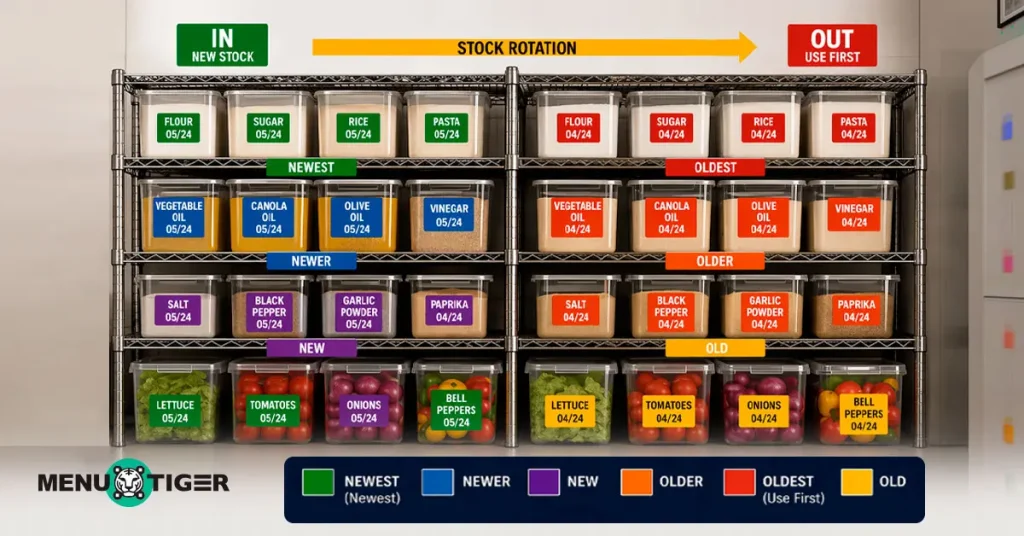
Standardization in your labeling system lessens the cognitive load of your staff.
An effective way to do this is to color-code every label tag on each of the ingredients.
Let’s say, red is for meat nearing expiry and green for fresh stock. With this, your staff can easily identify priority items at a glance.
This is especially useful if you're operating fast casual restaurants where multiple people handle inventory at different times.
5. Conduct routine inventory checks.
Regular checking acts as a control mechanism to assess if the FIFO inventory method is followed.
Even with good staff training and a functioning workflow in place, human error can still happen. Some items may be misplaced, unlabeled, or overlooked. So regular check-ups matter.
In your routine checks, it will help you identify expired or near-expiry ingredients, storage inconsistencies, over-ordering patterns and other aspects that need improvement.
In Most high-volume kitchens, they schedule it daily before and after business hours, especially if they have high-value items that are fast-moving.
6. Store similar items together and avoid overstocking.
Group similar ingredients, like all dairy in one section, and meat on the other, for them to be visible and prevent the chances of misrotation.
When items are scattered, this method is hard to pull off.
Aside from this, inventory control is equally important. Overstocking weakens FIFO because older items get buried under excessive new deliveries.
Purchase supplies with limitations. Know how much meat you use every three days or how many liters of oil you consume in a week, so you’ll know how much you’ll need to stock.
7. Assign responsibility for inventory zones.
Accountability is often overlooked, though critical.
What you can do is to assign specific staff members to manage defined inventory zones, so their sense of ownership increases their attention to detail.
In practice, this means fewer ‘gray areas’ where stock management gets neglected. Through assignments, staff are more likely to maintain the standard when they know a section is theirs to maintain.

Why FIFO matters in restaurant menu management
FIFO is not merely a food safety measure. When implemented well, it becomes the operational backbone that makes strategic menu management possible.
Here is how the two connect:
Ensures a consistent food quality across the menu
Menus are built on the promise of consistency and to do that is to keep the ingredients in their best condition.
Using this restaurant inventory system tool, ingredients are used within their optimal freshness window, so your dishes taste the same every time they’re served.
Remember, inconsistency affects customer trust and repeat business.
Maintains menu availability
How well your menu performs depends on ingredient readiness, and that’s what is FIFO here for.
Because you create a predictable flow of stock, this helps the kitchen to avoid sudden shortages or last-minute substitutions.
Restaurants that apply this method consistently are better positioned to deliver a stable, uninterrupted menu even during peak hours.
Strengthens menu planning
You’ll be able to generate more reliable data on ingredient usage, making menu management easier.
This means you’ll know which menu items drive the most inventory movement, where food waste is occurring, and how to adjust purchasing and your menu design.
Using these insights, support smarter menu engineering decisions and help you refine offerings based on their operational pattern.
Supports accurate menu costing and pricing
Reliable restaurant menu pricing depends on accurate food cost data. What FIFO helps is to maintain this accuracy by reducing hidden waste and ensuring inventory is used as intended.
When applied, fewer ingredients are lost to spoilage or mismanagement. This translates to the cost of goods sold (COGS), which reflects what is truly being used in your kitchen, not inflated.
As a result, menu pricing decisions are guided by real, reliable data that allows operators to set prices that protect margins without overpricing their dishes.
So, why FIFO and does it really matter?
What is FIFO’s principle is simple: Use what comes in first.
And from a business perspective, this is the most cost-efficient way for inventory management because no grain of ingredients is wasted, saving owners a huge chunk of their operating expenses.
But more than that is serving customers the best-quality dishes, reinforcing strong menu management practices that help restaurants like yours better align ingredient usage and pricing strategy.
For fast-moving environments like restaurants, every cent matters so having a an inventory system.
FAQs

Chevy
Before joining MENU TIGER's Content Team, Chevy has been dabbling in literary arts for five years, specifically creative writing in a theatre company. She loves exploring her creativity through painting, photography, and contemporary dancing.
Affiliates





© 2026 Menu Tiger. All rights reserved